
Deep Tissue Massage
Deep tissue massage is focused hands-on work on muscles and other soft tissues, with the pressure adapted to your comfort and the area being treated. Bluebell offers deep tissue massage at its clinic on Warren Road, Blue Bell Hill, Chatham ME5 9RD. It is an option to discuss for muscle tension rather than a promise that stronger pressure will solve pain. If an injury is changing how you move, physiotherapy assessment may be a more appropriate starting point.
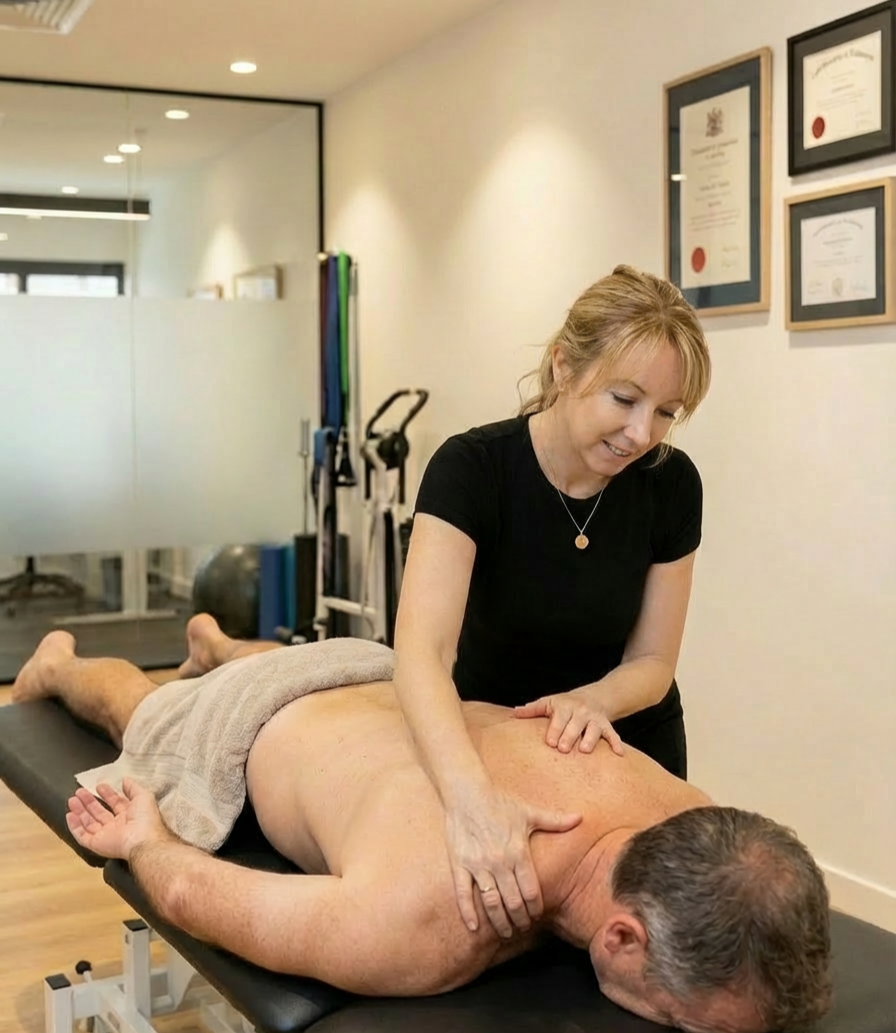
Choosing focused soft tissue work
A useful massage appointment starts with a clear description of the problem. Is it tightness after sitting, discomfort following training, or a painful movement that keeps returning? Those situations can feel similar but need different decisions. Describe where you feel the tension, whether it spreads and what you hope the appointment will address. The aim is to choose work that fits the symptoms, not to work through every muscle or chase the deepest possible pressure. You do not need to be an athlete to discuss this treatment.
Pressure, pace and your comfort
The word deep does not mean that treatment must hurt. Pressure can be adjusted, and you should say if you feel sharp pain, tingling or discomfort that makes you tense up. Explain any recent injury, surgery, medicines or medical conditions before hands-on work begins. You can ask which area is being treated and why, or request a pause. Communication during the appointment matters more than tolerating a technique because you think a painful massage must be more effective.
Deep tissue massage or sports massage?
Deep tissue describes an approach to soft tissue work, while sports massage usually describes the context: exercise, training and recovery. They can overlap, but the names do not tell you exactly what an individual appointment will involve. Our sports massage service includes sports, deep tissue and therapeutic massage. For a fuller explanation of the terminology, read the sports massage versus deep tissue guide. Choose based on the problem you want assessed and discuss the options with the clinic rather than booking solely on the treatment name.
When physiotherapy is the better first step
Massage is not a replacement for investigating an injury. If pain affects strength, changes your walking or keeps returning during the same activity, an assessment can look at movement and function as well as muscle tension. A physiotherapist can discuss whether hands-on care, exercise or another approach belongs in your plan. Our physiotherapy page explains that service. Seek medical advice for severe or rapidly worsening symptoms rather than using massage to delay getting checked. A treatment label cannot establish the cause of unexplained pain.
Booking and discussing the cost
If you are comparing how much deep tissue massage costs, ask Bluebell for the current fee and what the appointment includes before booking. A national average or a price for a longer session elsewhere does not tell you what this clinic charges. Tell us whether you want help with a particular muscle group or need advice on choosing between massage and assessment. All clinic visits take place at Blue Bell Hill, with free on-site parking and appointments Monday to Saturday, 8am to 8pm. There is no separate town branch.
Common questions
How much does deep tissue massage cost?
Contact the clinic for the current fee, appointment details and what is included. No national average is quoted here as a substitute for an actual Bluebell price.
Why is my body or back sore after deep tissue massage?
Some tenderness can follow pressure on soft tissues. Tell the clinician how you feel afterwards. Severe, increasing or persistent pain, new weakness or numbness needs medical advice, not an assumption that the massage is working.
Are deep tissue massages worth it?
That depends on what you need help with and whether soft tissue work fits the problem. Discuss your symptoms and expectations first; firmer pressure is not a guarantee of a better result.
Can I ask for lighter pressure?
Yes. Explain your comfort level and speak up during treatment. You can ask for the pressure to change or for the treatment to stop.