
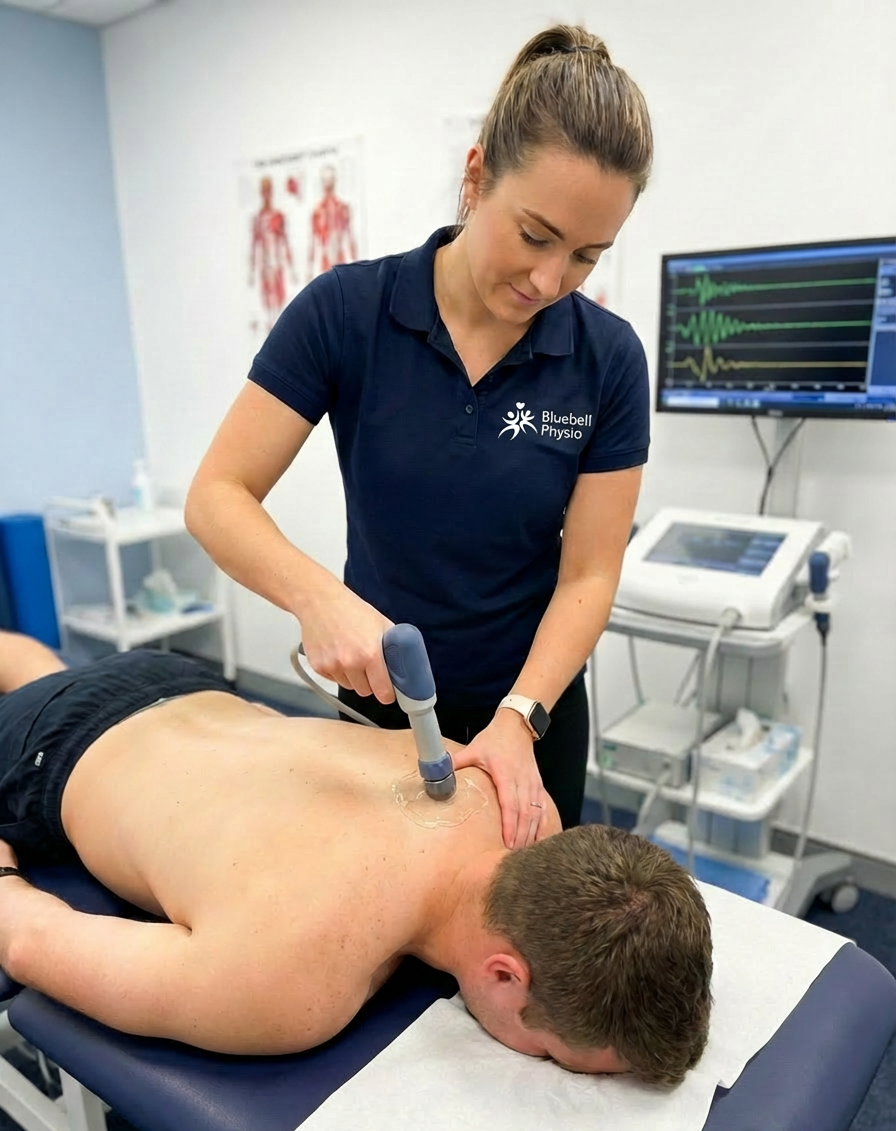
How Shockwave Therapy Works
Shockwave therapy delivers focused acoustic waves to damaged tissue. This stimulates the body's natural healing response, increases blood flow to the area and helps break down scar tissue and calcification that may be contributing to your pain.
Treatment is typically delivered over 3–6 sessions, often alongside physiotherapy, to optimise recovery and long-term results.
Conditions Shockwave Therapy Helps With
Who Is Shockwave Therapy For?
Shockwave therapy is particularly effective for people who have been struggling with persistent pain that hasn't improved with rest, medication or other treatments. It's commonly used for tendon problems but can also help with chronic muscle tension and calcification.
At Bluebell, we combine shockwave with physiotherapy and other electrotherapies when appropriate to give you the best chance of a lasting result, not just a temporary fix.
Shockwave physiotherapy for elbow pain
Tennis elbow and other persistent tendon pain around the elbow are among the problems shockwave is used for. At Bluebell, private shockwave therapy is offered alongside physiotherapy, so the treatment sits within a plan that includes loading exercise and advice on gripping and lifting. Our tennis elbow page explains the condition, its causes and the other treatment options.
Why shockwave treatment may help
Shockwave treatment delivers acoustic waves into a tendon or the plantar fascia. It is thought to work by changing pain sensitivity in the area and encouraging the tissue to respond and remodel, which is why it is used for long-standing problems rather than fresh injuries. It is not suitable for everyone. Your physiotherapist checks your history first, including pregnancy, blood thinning medicine, recent steroid injections and any bleeding problems. For a longer explanation, read shockwave therapy explained, or see our plantar fasciitis page for heel pain.
Why it can feel uncomfortable
Most people find shock wave therapy uncomfortable rather than painful, and the intensity is adjusted so you can tolerate it. A sensitive tendon often feels most tender at the start of a session. The area may ache for a day or two afterwards. Tell your clinician how it feels during treatment, and contact the clinic if pain increases sharply afterwards or you notice significant bruising or swelling.
Home devices and home exercise
Searches for the best shockwave therapy device usually lead to consumer products sold for home use. These are not the same as clinic equipment, and using one without an assessment risks treating the wrong problem. What you can do at home is the exercise programme that goes with treatment, which is an important part of the plan between sessions.
Cost and insurance
Ask the clinic for the current shockwave fee before you book, and what a course of treatment is likely to involve after your assessment. If you have private health insurance, such as AXA, Bupa or Vitality, check with your insurer whether shockwave is covered for your condition and whether they need to authorise it first. You can book directly at Warren Road, Blue Bell Hill, Chatham ME5 9RD, Monday to Saturday from 8am to 8pm.
Common questions
How much does shockwave therapy cost?
Fees can change, so ask the clinic for the current price and what each session includes before you book.
Why is shockwave therapy used?
It is used for persistent tendon and plantar fascia problems that have not settled with exercise and other treatment.
Why does shockwave therapy work?
It is thought to reduce pain sensitivity and stimulate a healing response in the treated tissue. It works best combined with loading exercise.
Why does shockwave therapy hurt?
Sensitive tissue reacts to the pressure waves. Intensity is adjusted to what you can tolerate, and most people describe it as uncomfortable rather than painful.
Does AXA cover shockwave therapy?
It depends on your policy. Check with AXA whether shockwave is covered for your condition and get any authorisation before treatment.
Can I do shockwave therapy at home?
Home devices are not the same as clinic equipment and are used without assessment. Your home exercise programme is the part to focus on between sessions.